
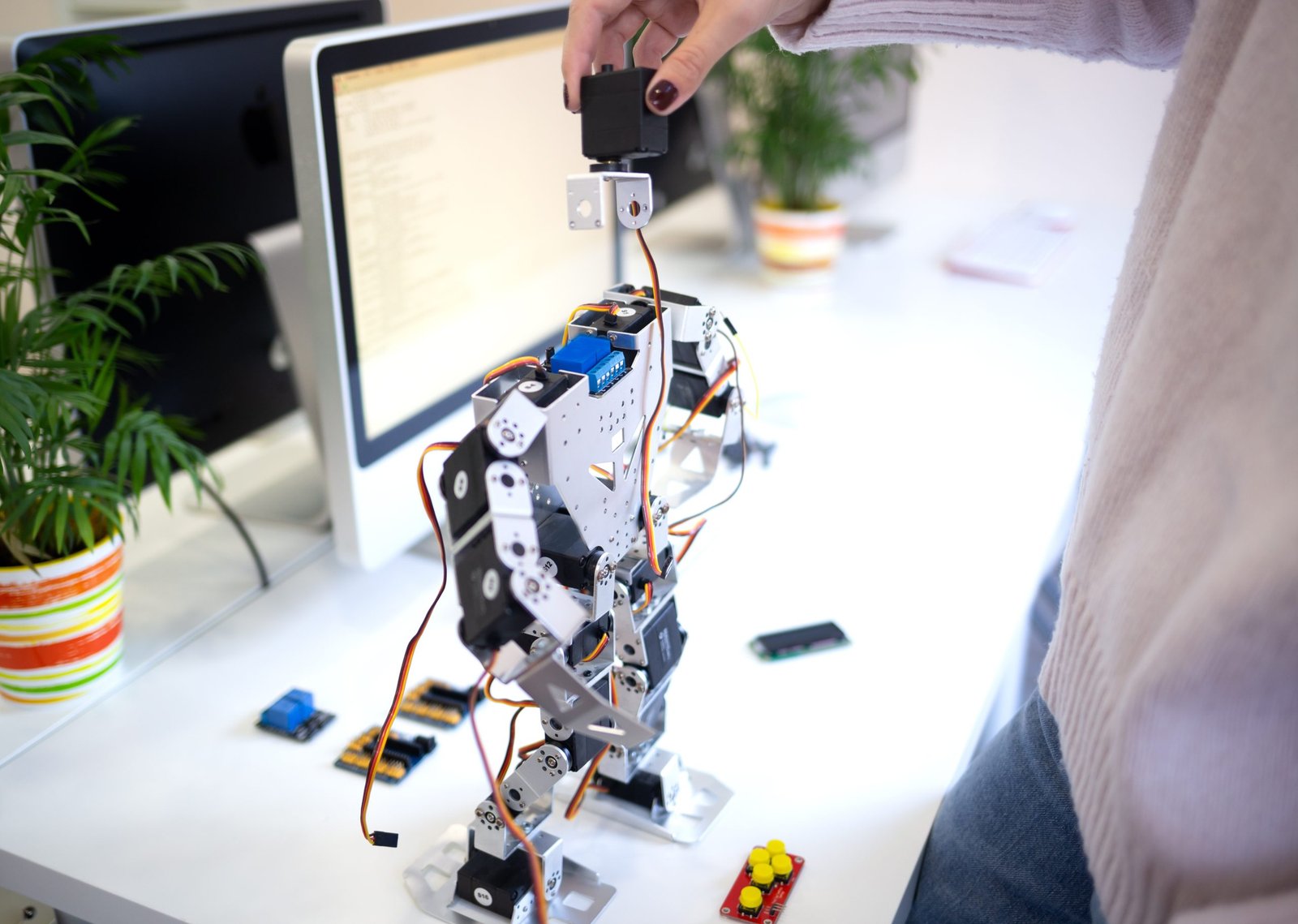
At Sunmarke School, education goes far beyond textbooks and exams. We believe the most meaningful learning happens when students actively engage with real-world challenges, think critically, and apply their knowledge in practical ways. This is why STEAM education – Science, Technology, Engineering, Arts, and Mathematics – is at the heart of our curriculum, blending creativity with problem-solving and academic rigour.

One of the most impactful approaches we take in our STEAM provision is Design Thinking. This method allows students to creatively solve real-world problems with empathy, collaboration, and interdisciplinary skills that mirror how professionals innovate and make meaningful change.
Why Projects Matter in STEAM Education
In the British curriculum, a strong emphasis is placed on developing not just knowledge, but also critical thinking, creativity, and collaboration. Projects bring these aims to life.
- Connecting theory to practice: A lesson on renewable energy becomes far more memorable when students design and build their own solar-powered car.
- Encouraging creativity: The ‘A’ in STEAM ensures that artistry and innovation are woven into problem-solving, whether through designing prototypes, coding interactive media, or using visual arts to present findings.
- Building resilience: Projects often involve trial and error, encouraging pupils to see mistakes as opportunities to refine and improve their ideas.
- Collaboration and leadership: Working in groups helps students practise teamwork, communication, and leadership – vital skills for university and future careers.
Sunmarke’s Approach to STEAM Projects
From Early Years through to Sixth Form, Sunmarke pupils take part in projects that are carefully designed to stretch their imagination while strengthening academic knowledge.
- In EYFS and Primary, children explore hands-on challenges such as building catapults, designing sustainable vehicles, constructing drone chassis, baking for Fairtrade and healthy eating while running a marketing enterprise, creating space rovers and rockets, and experimenting with zoetropes.
- In Secondary, students delve deeper into cross-disciplinary tasks. For example, they might design a sustainable home that integrates principles from science, technology, and design thinking, or create a digital animation that communicates a scientific concept to younger pupils. Students also shine on global platforms, such as Junk Kouture, where Sunmarke teams have achieved remarkable recognition by designing high-fashion outfits from recycled materials—blending sustainability, creativity, and engineering in a way that inspires peers around the world.
- At Sixth Form level, projects become even more sophisticated, aligning with GCSE, A-Level and BTEC coursework. Students often tackle real-world case studies, sometimes in partnership with external organisations or industry experts, preparing them for higher education and the workplace.
Preparing Students for the Future
Project-based STEAM learning aligns perfectly with the skills demanded by the 21st-century economy. Employers are increasingly seeking individuals who can innovate, adapt, and collaborate. By immersing pupils in real-life scenarios and encouraging them to think outside the box, Sunmarke equips students not only with academic excellence but also with the mindset to become future-ready leaders, creators, and problem-solvers.
A Culture of Innovation
At Sunmarke, projects aren’t an “add-on” but a core philosophy of learning. They showcase our commitment to Positive Education, where academic success is balanced with character development, wellbeing, and a spirit of innovation. By learning through doing, our students gain confidence in their abilities, pride in their achievements, and the courage to take on new challenges.
In essence, Sunmarke’s STEAM projects bring learning to life. They transform abstract theories into tangible experiences, empower pupils to discover their passions, and prepare them to make meaningful contributions in an ever-changing world.